Tether Wallet Lightning Privacy Issues
Tether’s new wallet routes Lightning payments through Spark, which exposes transaction details publicly and undermines the privacy of Lightning. The current setup misleads users by failing to communicate this clearly.

Earlier today, I shared the announcement of the new Tether Wallet in the Bitcoin Design Community Discord shortly after seeing it on X.
570 million people trust Tether. Now, we’re putting that global infrastructure directly into your hands. 🌐 Meet Tether Wallet: the fully self-custodial app designed for everyday life.
— tether wallet (@tetherwallet) April 14, 2026
▪️Universal: 💸 USD₮, USA₮, XAU₮, & Bitcoin (On-chain + Lightning⚡).
▪️Simple: Send to… pic.twitter.com/TfeWRT0VOl
Within minutes, Christoph had already put together a Figma file with screenshots of the flows and comments, which made it much easier to review the product in detail.
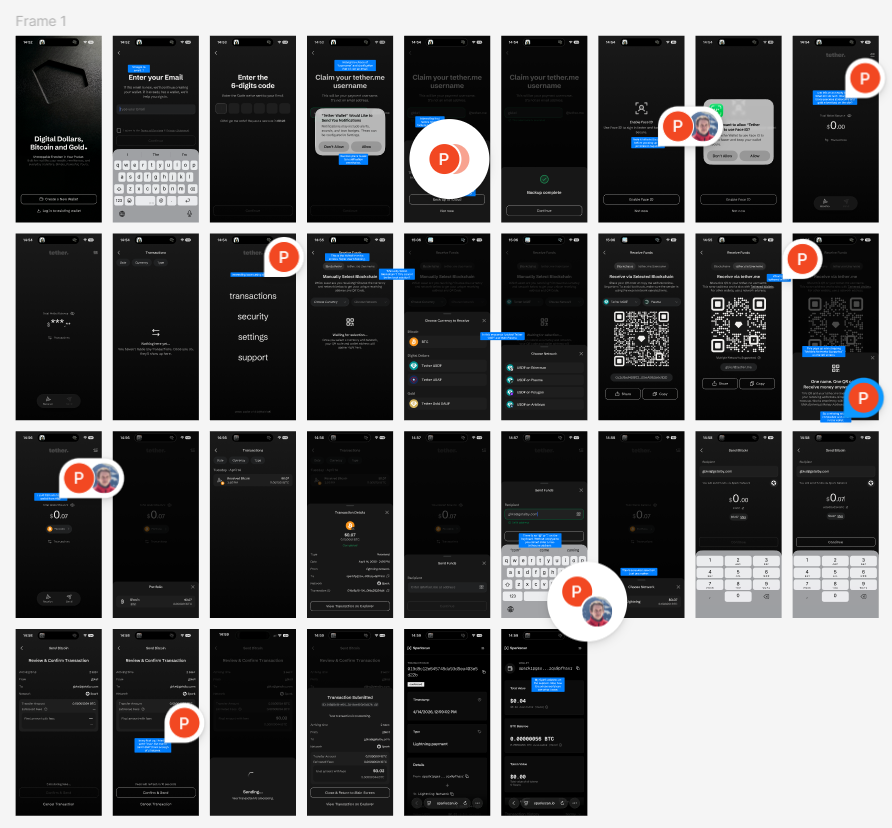
One of the first things I wanted to check was how well the wallet interoperates with current Lightning standards.
In my initial tests, sending and receiving with wallets like Wallet of Satoshi and Blink worked without issues. BOLT11 and LNURL seem to work well. However, I did not find support for BOLT12, either directly or through human-readable payment flows (BIP 353) built on top of it.
We plan to keep looking more closely at the wallet’s usability, but one issue identified by Christoph stood out immediately: it appears that every Lightning payment is being routed through some kind of Spark bridge.
Why does that matter?
Lightning occupies a special place in the Bitcoin stack as an instant payments layer with different privacy properties from systems that keep a permanent, publicly inspectable record of transfers in a single place. That can be especially valuable for users who are more privacy-conscious.
If Lightning payments in this wallet are in fact being processed through a Spark bridge, that changes the tradeoff. A Lightning payment no longer remains only a Lightning payment. It also appears to be recorded as a Spark transfer, which may make it visible in a Spark explorer.
When I checked my own Spark address, I could see every Lightning payment I had sent and received, including the amounts, the order in which they occurred, and the time of each transfer.
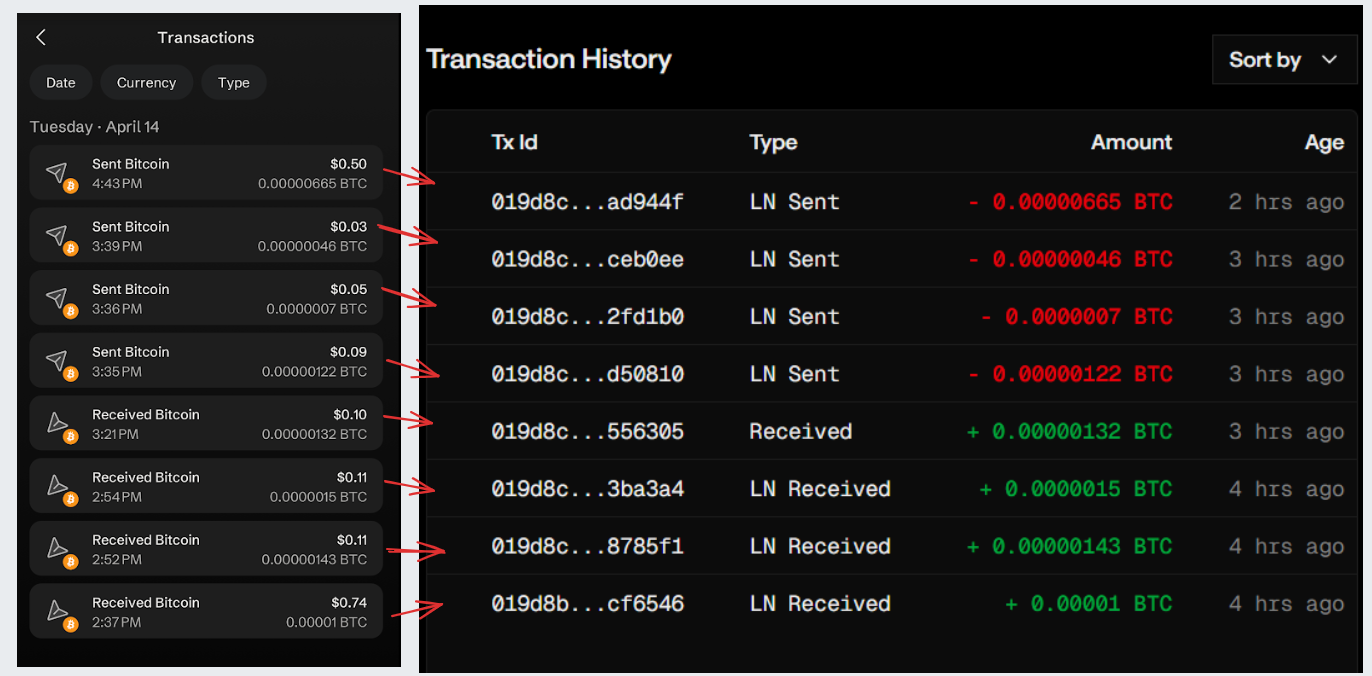
I believe this is an important issue because it affects the tradeoffs involved in choosing this wallet. Its usability looks promising, and there is a lot to like in the way it simplifies different payment formats and hides complexity from the user.
But the underlying payment processing, and the persistence of the resulting transaction record, should be clearly communicated so that users understand what they are opting into and are not exposed to risks they did not expect.
Good wallet design is not only about making payments easier. It is also about making the tradeoffs visible.