Centralized Power, Open Models
China may see letting people around the world freely use and adapt its AI models as a way to strengthen its geopolitical power.

Alibaba lets developers download its Qwen3 models, modify them and run them on their own hardware. DeepSeek distributes model weights alongside its paid API.
Both companies operate within a political system known for centralized authority and tight control over information.
That apparent contradiction is what interests me. Why would China encourage the distribution of powerful technology that developers can copy, modify and operate without asking permission or paying anything in return?
I think the answer is that China does not need to control every copy of a model to benefit from its spread.
I see China's open-model push as a deliberate strategy of demand creation. Chinese companies can distribute capable models widely, lower the cost of experimentation and enlarge the global market for AI. That gives them more opportunities to sell the infrastructure needed to run those models.
The model itself does not have to be the product. It can create demand for the products and services needed to use AI at scale.
If Chinese models become widely used, Chinese companies have more opportunities to sell computing power, cloud services, deployment tools and other infrastructure.
China may therefore be willing to give up control over individual copies of its models while trying to strengthen its position in the market around them.
Political control and freedom for individual developers do not necessarily conflict.
The comparison with the United States helps separate political openness from model openness.
The United States has a more decentralized political and economic system, yet many of its leading AI companies keep their most capable models under company control and provide access through their own products and APIs. China exercises much tighter political control, yet some of its most competitive AI companies release model weights that developers can download, modify and run elsewhere.
The divide is not absolute. American companies also release open-weight models, and Chinese companies operate under strong domestic restrictions. But the difference is still worth examining. The more centralized political system may be more willing to give up control over the technology itself.
Why would a system built around tighter political control accept less control over the model?
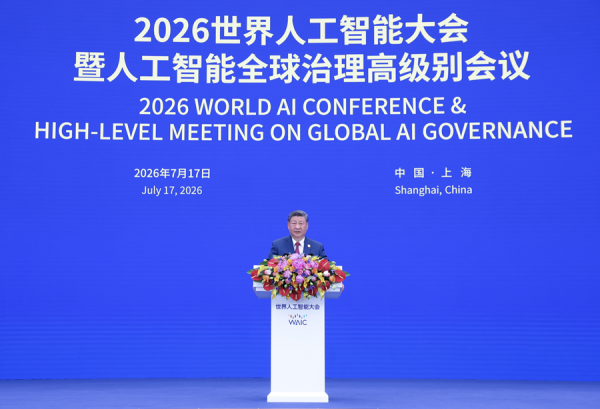
At the July 2026 World AI Conference, Xi Jinping encouraged "open source, openness, collaboration and sharing" while also calling for AI to remain "secure and controllable."
The two statements concern different kinds of control.
China can encourage people to develop and distribute AI technology while maintaining political restrictions on services offered inside the country.

The country's 2023 measures governing public-facing generative AI make that distinction clearer. Services offered to the public within China must comply with prescribed political values. At the same time, the measures encourage innovation in chips, software, algorithms and computing infrastructure.
The state can encourage technological development without giving up political oversight.
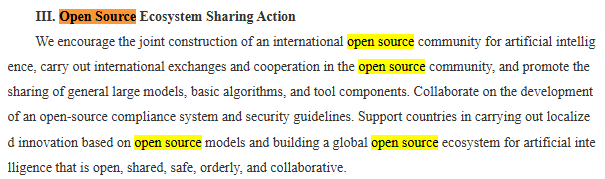
China's AI Cooperation and Development Action Plan, published in July 2026, makes the international ambition clearer. It calls for international open-source communities, shared models and support for countries adapting those models locally. It also promotes access to computing power and cooperation on technical standards.
The policy connects wider access to models with wider access to the infrastructure needed to run them.
Distributing models creates users. More users need computing, deployment tools and infrastructure.
I read this as an attempt to make Chinese companies important suppliers to a much larger global AI market. The policy documents describe cooperation, infrastructure and shared development. The geopolitical effect is my interpretation of where that policy could lead.
China has used versions of this approach before.
Solar is the clearest example.
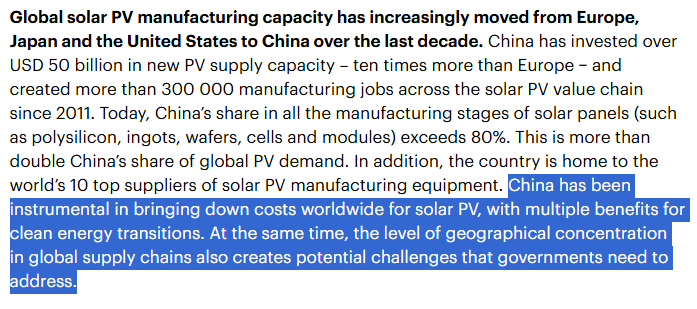
The International Energy Agency's 2022 study describes how Chinese policy supported manufacturing capacity and domestic demand at the same time. Larger production volumes and technical improvements pushed costs down. Cheaper panels made more installations economically viable, which created more demand for manufacturers.
China did not only compete for an existing solar market. It helped make that market larger.
By the time of the report, China's share exceeded 80% across all major stages of solar-panel manufacturing.
Consumers around the world got much cheaper solar technology. The global industry also became heavily dependent on Chinese production.
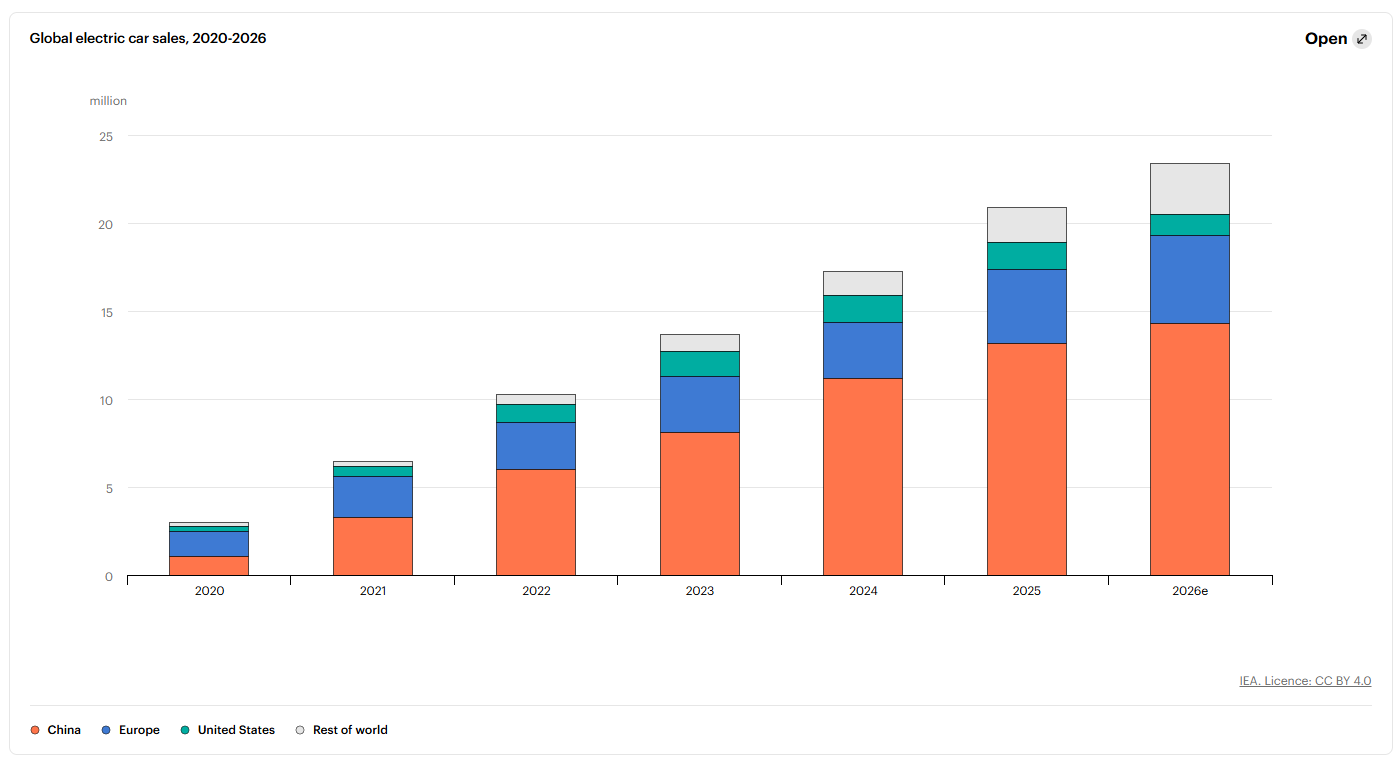
Electric vehicles show a related pattern. The IEA's 2026 outlook describes continued Chinese purchase incentives and the role of affordable Chinese vehicles in expanding overseas markets. Supporting adoption gave manufacturers scale. Lower prices brought more customers into the market.
Cheaper access did more than shift market share. It increased demand.
AI models are not solar panels or cars.
The similarity is that lower prices and easier access can bring more people into the market.
Open models may be especially effective at this because software can spread much faster than physical products.
A developer can download a model and begin experimenting at very low cost. Some experiments will fail. Others will become applications that need GPUs, hosting, deployment tools, technical support and more computing capacity.
Once a company releases model weights, it loses much of its control over how people use, modify and distribute them. Someone can download a model, change it, deploy it elsewhere and never become a customer of the company that created it.
That makes open AI a less certain route to economic power than solar panels or electric vehicles.
Demand creation does not guarantee demand capture.
But running a model at scale still requires resources.
Someone has to provide computing power. Someone has to handle deployment, scaling, monitoring and maintenance. For many organizations, self-hosting can eventually become more expensive and complicated than paying a provider to run the model.
Consider a small company building an assistant for its internal documents.
It can test an open model on its own machines, adapt it to its needs and find out whether the idea works without asking a platform for permission.
Without the downloadable model, the experiment might never happen.
If the project succeeds and eventually needs to serve hundreds or thousands of employees, the problem changes. The company now needs reliable computing capacity, deployment tools and operational support.
The free download has created demand that did not exist before. The company may now become a paying infrastructure customer.
Alibaba has an obvious reason to encourage that progression.
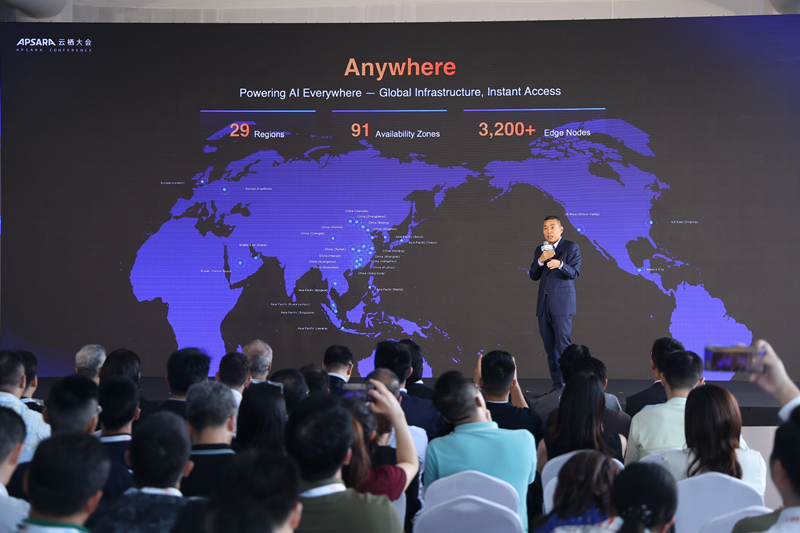
Alongside its downloadable models, Alibaba sells access to Qwen through Alibaba Cloud Model Studio. Developers can become familiar with Qwen before deciding whether they want Alibaba to run it for them.
They do not have to choose Alibaba.
Alibaba can give up control over the first step because wider use gives it more chances to sell services later.
Open models also make it easier for users to leave than closed platforms do. A developer can run Qwen on European infrastructure, American infrastructure or hardware in a local server room. Competitors can offer services around the same models. Companies outside China may capture much of the economic value those models create.
China may be comfortable with that risk.
Chinese companies have decades of experience competing on price and scale. Solar and electric vehicles show the pattern. Chinese policy helped expand those markets while companies built large production capacity, pushed prices down and competed for the resulting demand.
The strategy does not require Chinese suppliers to win every customer. It only requires them to win enough.
The same logic can apply to AI.
China does not need every developer using a Chinese open model to buy Chinese cloud services. If those models make the global AI market much larger, Chinese companies only need to win a large enough share of the business that follows.
Current rankings suggest that they can compete for that business.
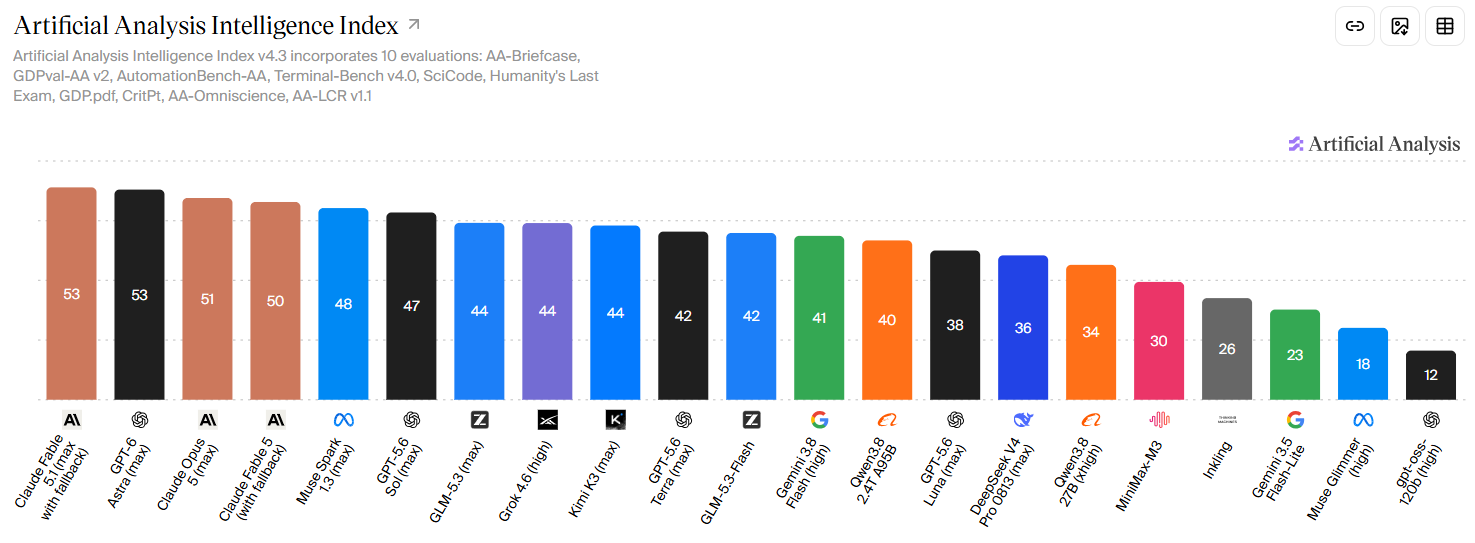
In September 2026, Artificial Analysis placed Chinese models at the top of the open-weight field. GLM-5.3 and Kimi K3 led its open-weight rankings, with Qwen and DeepSeek models also among the strongest. Its intelligence-versus-cost analysis placed Chinese models such as MiMo-V2.5-Pro and GLM-5.3-Flash on the cost-efficiency frontier.
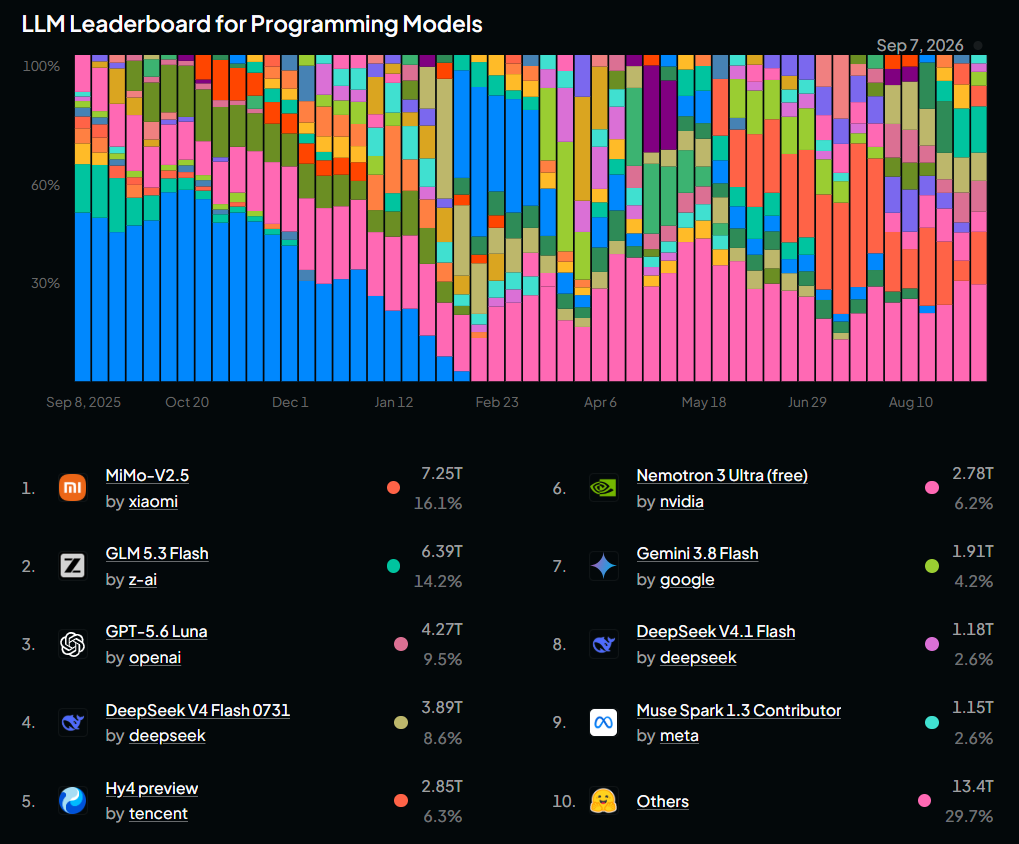
Usage data points in the same direction. On OpenRouter's programming leaderboard in September 2026, models from Xiaomi and Z.ai occupied the first and second positions. DeepSeek and Tencent models also appeared near the top. Earlier in the year, DeepSeek had become OpenRouter's most-used model author by token share.
These rankings change constantly, and no single leaderboard proves technological dominance.
Chinese open-weight models are no longer interesting mainly because they are cheap or permissively licensed. Several are competing near the frontier on capability while keeping a cost advantage.
This supports the demand-creation argument.
Giving technology away makes more sense when you believe you can compete for the business that its use creates.
China can help enlarge the market, let users decide where to spend their money and still expect Chinese companies to win a meaningful share through price, performance and scale.
In this case, openness does not mean withdrawing from competition. It may mean trusting Chinese companies to compete successfully once the market grows.
China is betting that making its technology useful to others will create demand, and that Chinese companies will be competitive when that demand arrives.
A centralized state does not need to control every decision to gain power from the decisions people make voluntarily.